Return to the ground
CyprusBUILDING WITH THE LAND
The vision behind the installation is to bring natural, sensory-friendly materials back into contemporary architecture, those that support human health, connect us to our surroundings and age gracefully over time. By combining traditional earth-building knowledge with modern research and technology, we can better understand and refine ancient techniques such as rammed earth. This approach bridges craft and innovation, allowing natural materials to take on new architectural and aesthetic forms suited for today’s needs.
Rammed earth is one of the oldest known construction methods and one of the most sustainable. Reintroduced in contemporary architecture, it represents a shift from extraction toward care: building with the land, not on top of it.
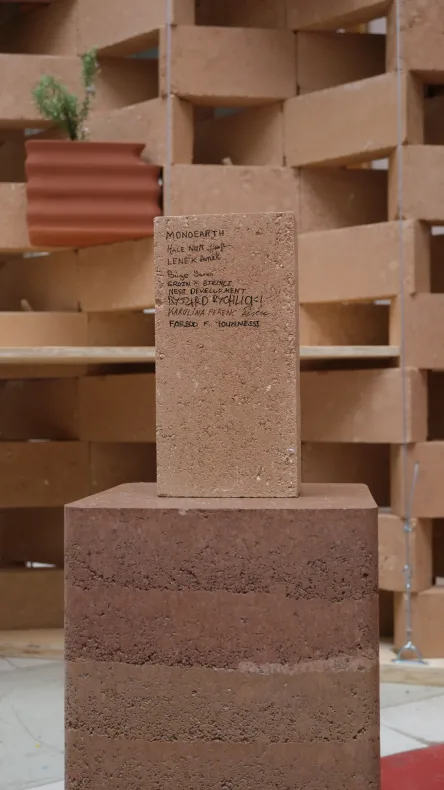
Made from compacted layers of local soil, rammed earth walls reflect the geology, color, and texture of their surroundings. Each structure becomes a physical record of place, a direct connection between architecture and the natural environment.
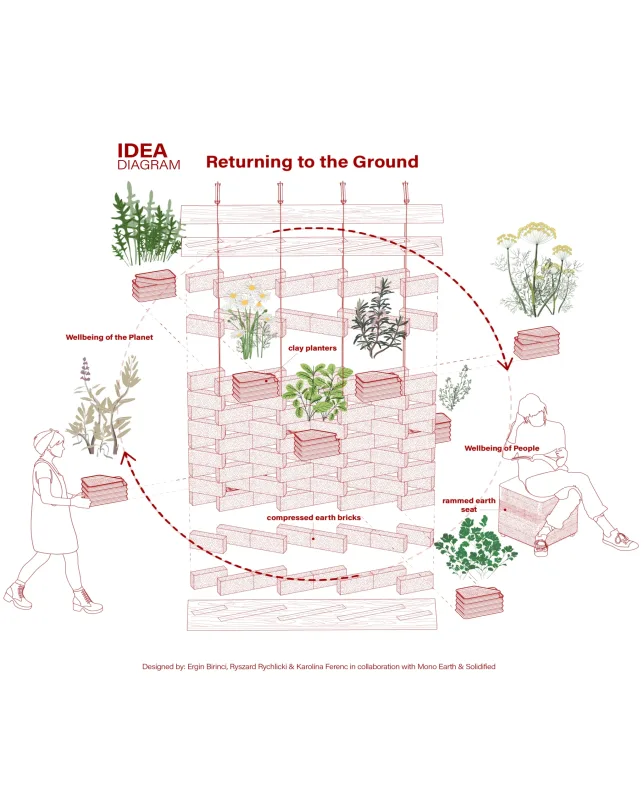
The process itself is low-impact: no firing, no chemical additives and minimal energy use. The result is a material that is durable, low-carbon and fully recyclable. What comes from the ground can return to it, leaving no waste.
Rammed earth also supports human wellbeing. Its thermal mass stabilizes indoor temperature, its density absorbs sound, and its ability to regulate humidity creates a comfortable and healthy environment. Designed to last for generations, it is an example of circular thinking applied to architecture, merging ancient craft with contemporary knowledge.
THE LIVING WALL
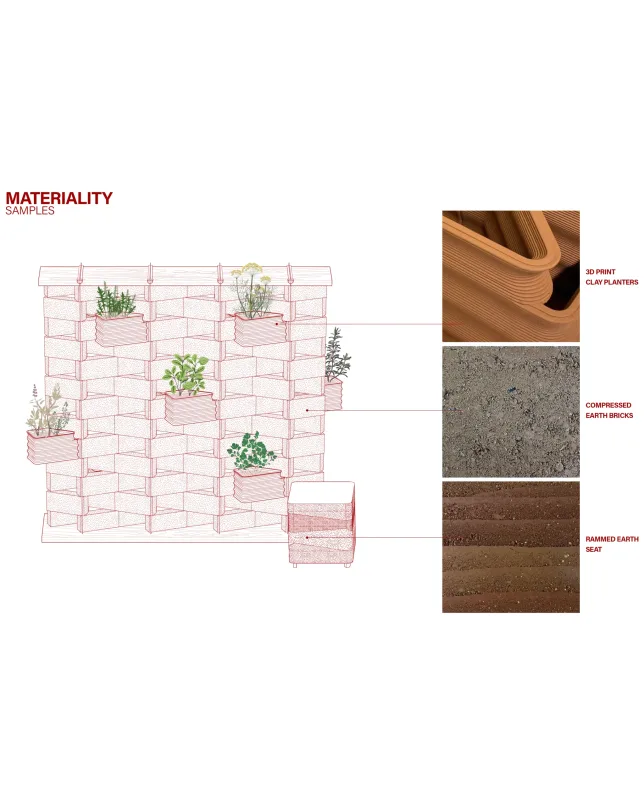
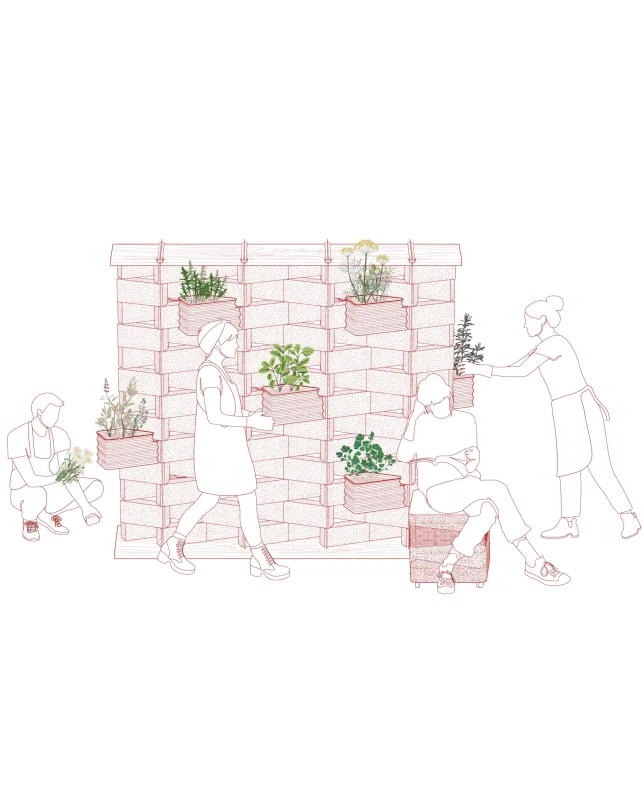
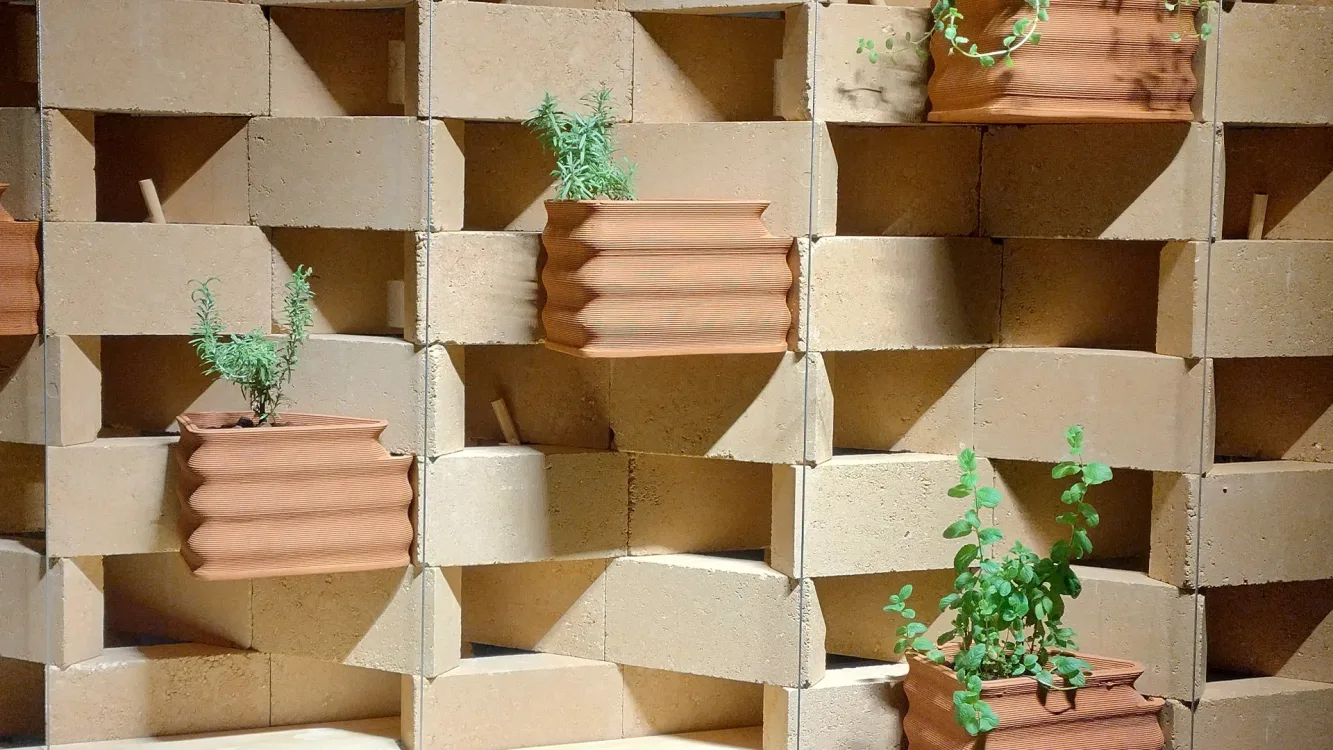
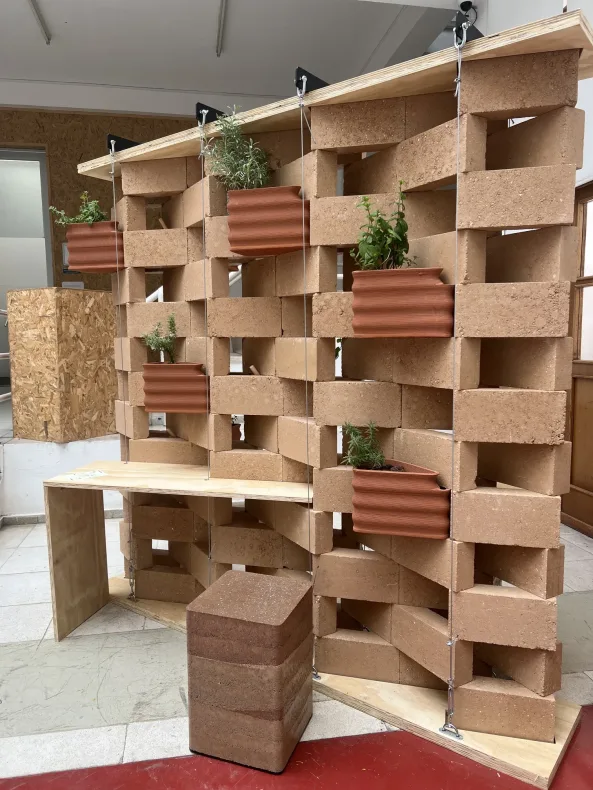
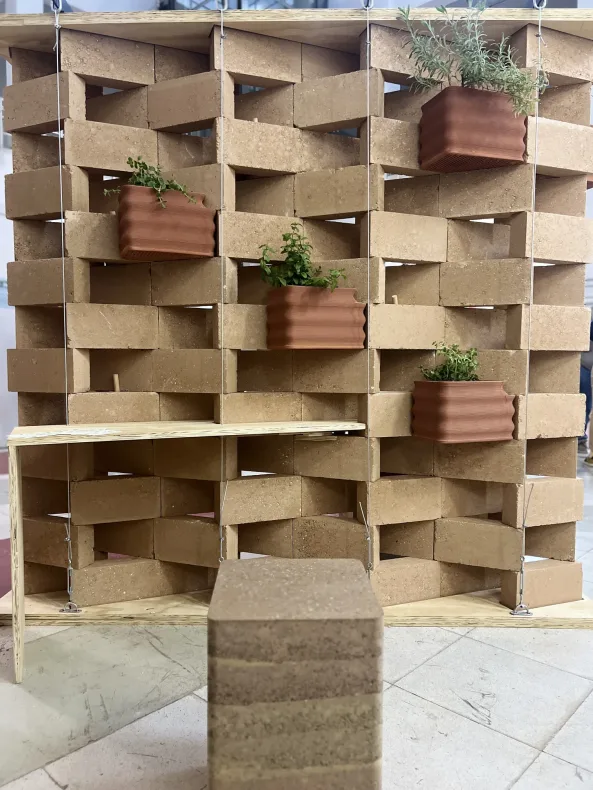
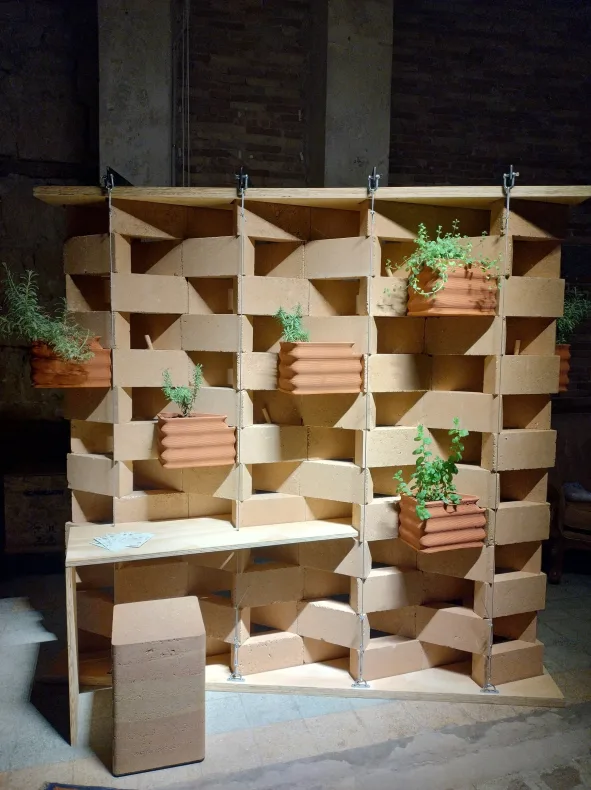
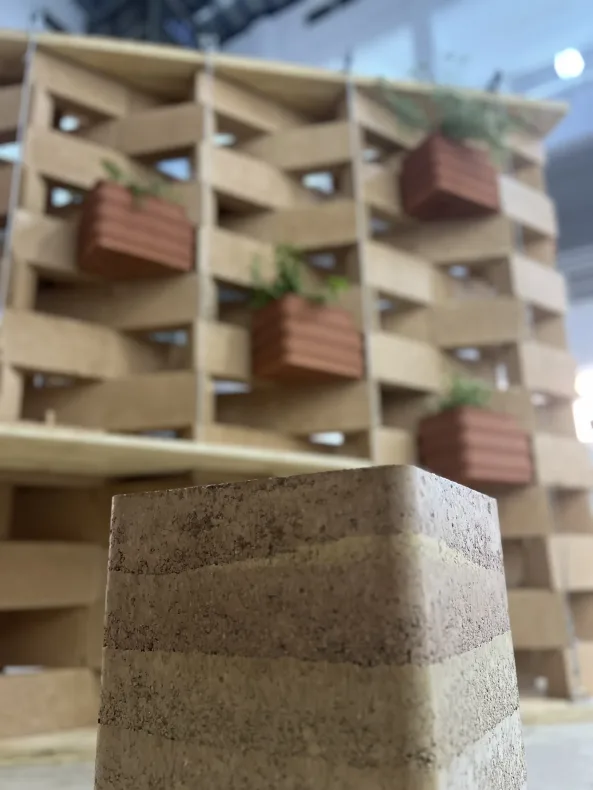
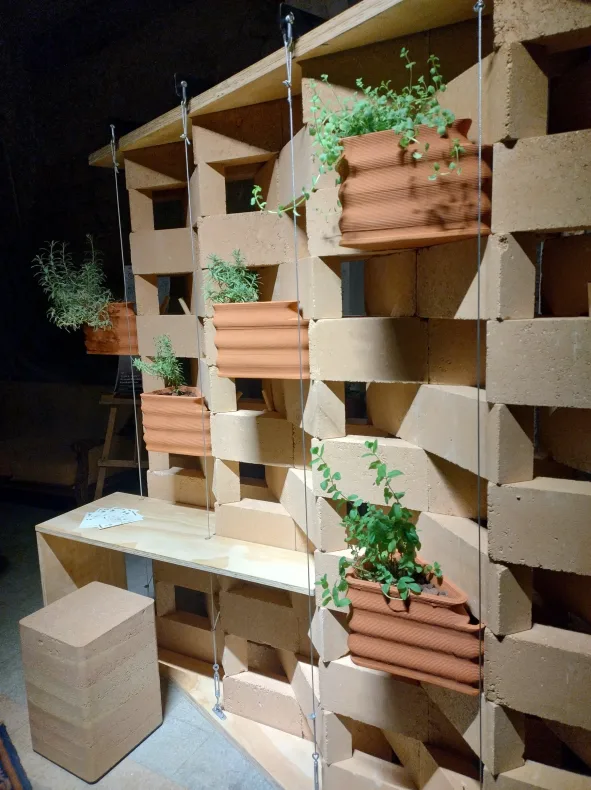
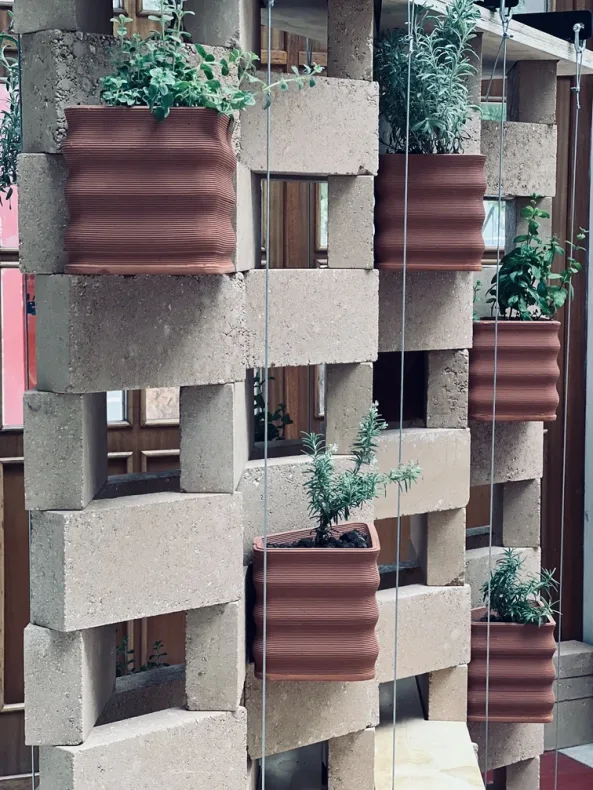
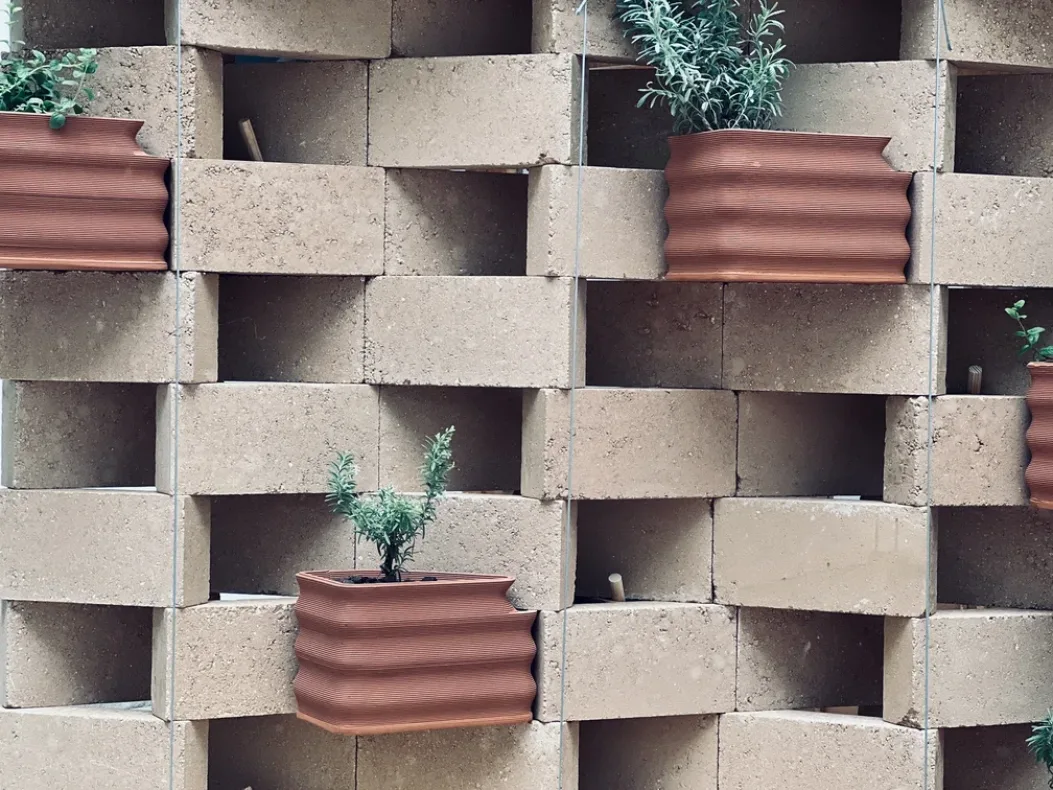
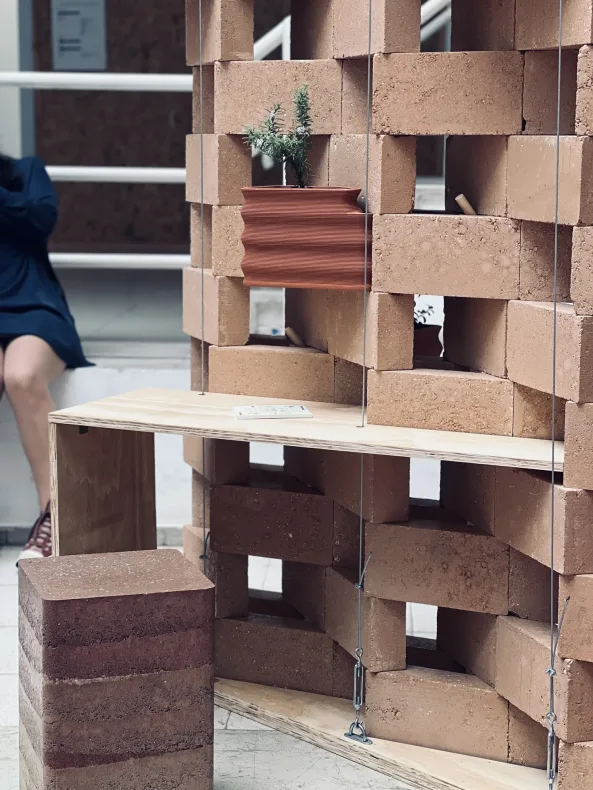
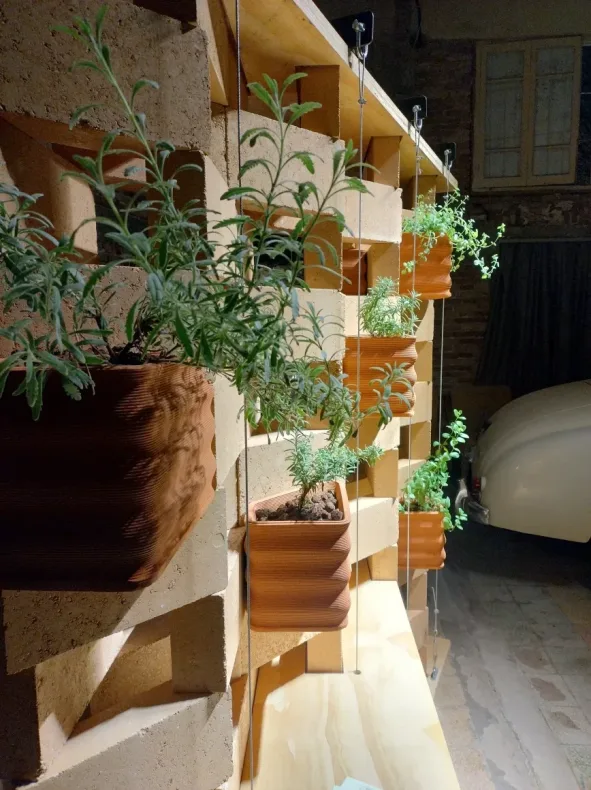
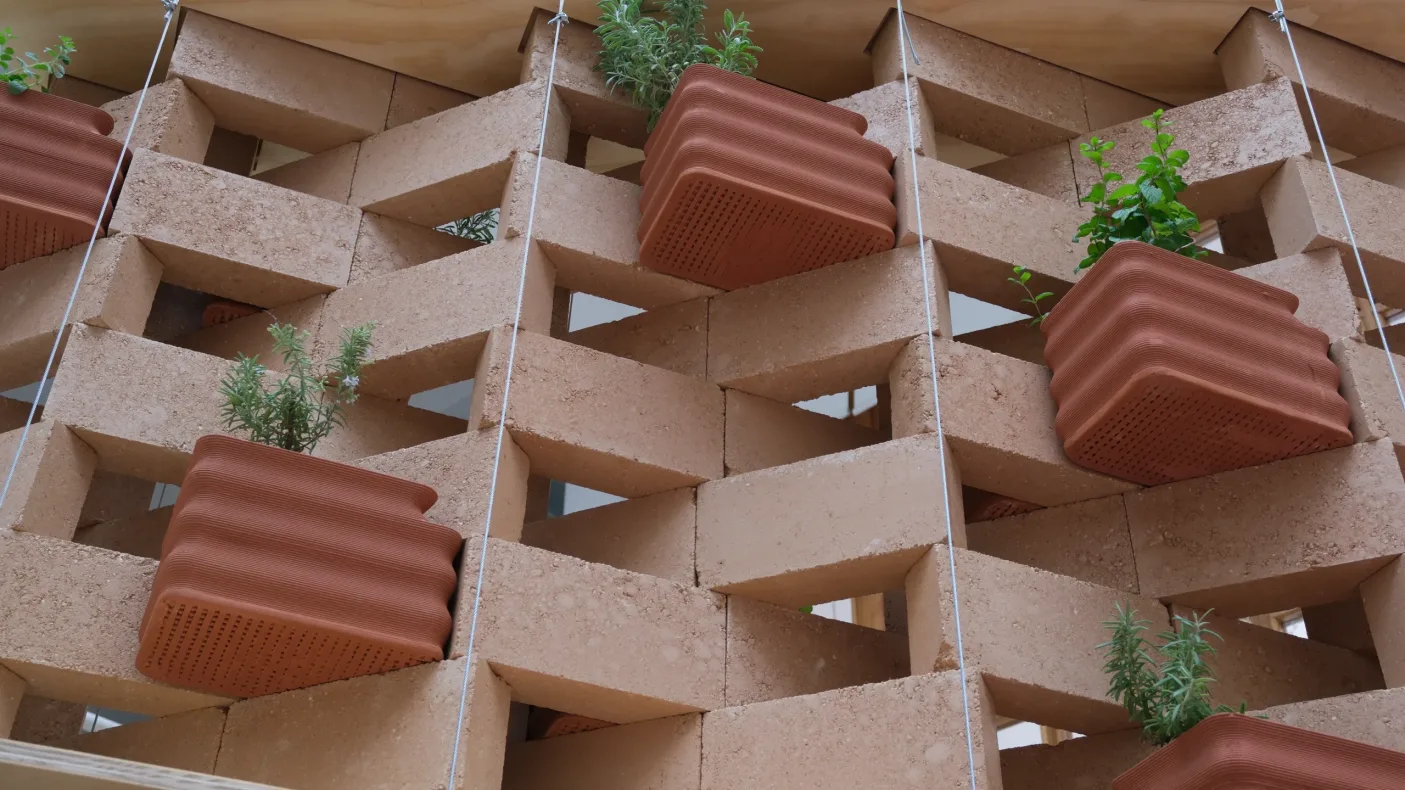
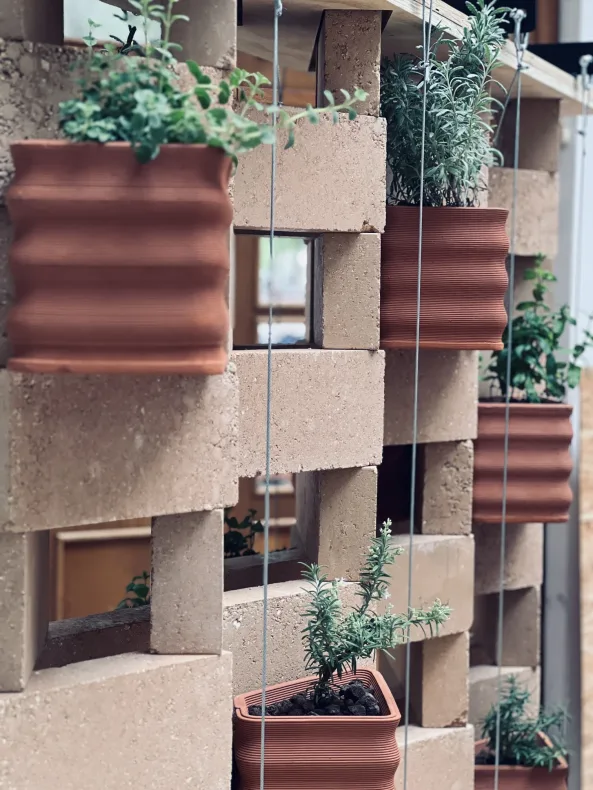
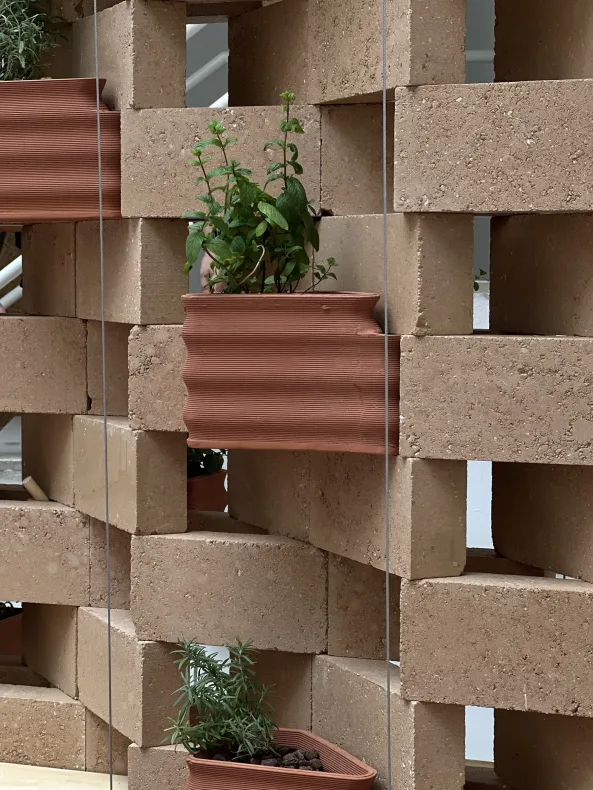
The installation invites visitors to experience earth as a living, sensory material. A vertical wall made of compressed earth blocks forms a rhythm of solid and open spaces — alternating transparency and enclosure.
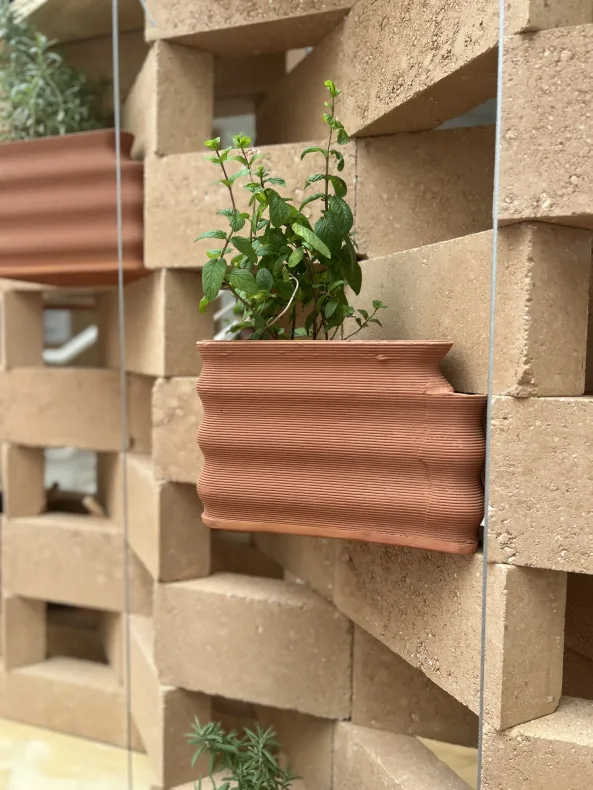
The surface encourages touch and exploration; its raw texture and natural scent reconnect visitors to the ground. Embedded within the wall are 3D printed clay pots containing soil and seeds of edible herbs such as mint, basil and thyme. Visitors are invited to water, care for and harvest these plants, transforming the structure into a shared, evolving ecosystem.
The installation demonstrates how architecture can engage both material intelligence and emotional awareness. It highlights the potential of rammed earth not only as a construction system, but as a medium for reconnection, between humans, nature, and the places we inhabit.

Work Stage
Concept design to aesthetical ControlStory